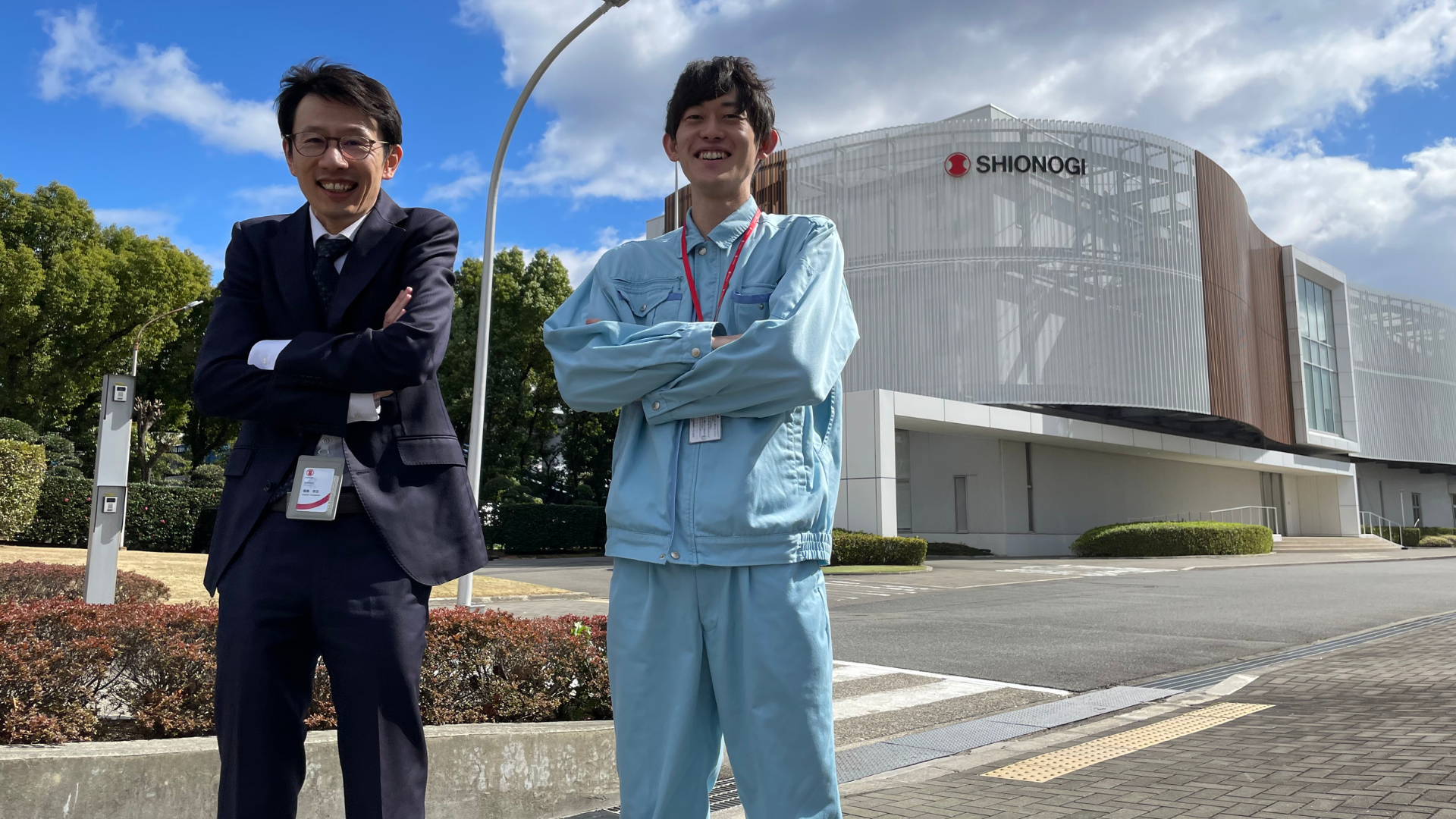
Significance of SHIONOGI’s Challenge in the “Resource Recycle Project”
May.21, 2024



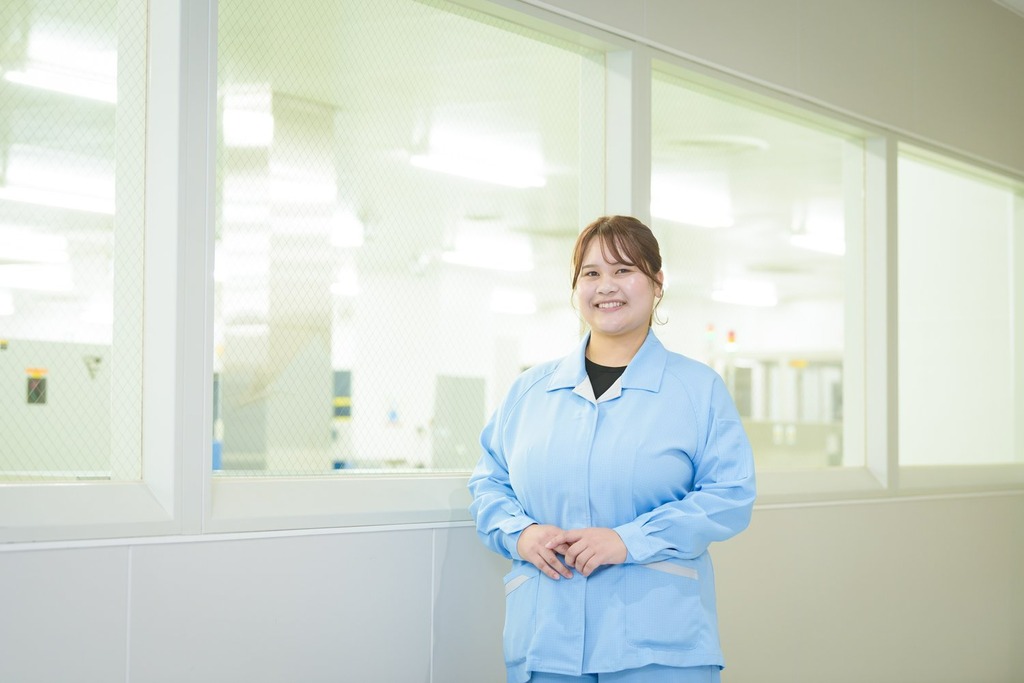
“I never imagined I’d find a job I love this much here.”
Those are the words of Miho Suzuki, who works at the Kanegasaki Plant (Iwate Prefecture, Japan) of Shionogi Pharma Co., Ltd., a group company of Shionogi & Co., Ltd. On the packaging lines for antibacterials and other medicines, she handles the final step before products are shipped. Suzuki loves talking with people and used to sell cars and cosmetics. She joined the pharmaceutical plant on her father’s recommendation, thinking she would “just give it a try.” There, she watched her senior colleagues at work and thought, “That’s cool.” We asked her about her days spent drawing closer, step by step, to the people she admired, and about what makes plant work so interesting.
—— First, tell us about your current role.
I work in the packaging process for medicines at Shionogi Pharma’s Kanegasaki Plant. As a process sub-leader on lines that package capsules, tablets, and other products, I work as a team leader or an operator, and I’m also involved in training staff and proposing improvements.
On a production line, the roles are clearly divided: team leader, operator, inspector. Each one has its own skill certifications. The packaging group has a huge number of them, probably around 80. You earn them one at a time, and only then can you finally work on your own.
—— I hear you used to work in sales, dealing with customers face to face. What made you move from there to the pharmaceutical industry, where you had no experience at all?
Before this, I sold cars and cosmetics in Morioka, Iwate Prefecture. I talked with customers and helped them choose what suited them. I’ve always liked talking with people, and I enjoyed it as a job, too. But I ended up moving back to my hometown and had to look for my next job. At first I looked for similar customer-facing work, but my father kept telling me, with real enthusiasm, “I hear Shionogi Pharma is a good company.”
—— So it was your father’s recommendation. What did you imagine plant work would be like?
To be honest, I pictured a rather gloomy place where you work silently on your own, without talking to anyone (laughs). It felt like the exact opposite of who I am, someone who loves talking with people, so I wasn’t too excited about it. But if my father was recommending it that strongly, well, why not. I started as a temporary agency worker in the summer of 2022, figuring it would be “just until I find my next job.”
—— Once you actually started working at Shionogi Pharma, how did that image change?
It was completely different! The first surprise was how bright and lively the workplace was. Far from working silently on my own, almost every day I was doing the job together with someone. To keep a line running steadily, the people on it have to keep talking to one another, or it just doesn’t run.
Then there was the behind-the-scenes side of manufacturing, which you normally never get to see. It was my first time inside such a large plant. I could imagine that making things involves all kinds of people, but when I actually saw it, I thought, “I had no idea it was this cool.”
—— Sales and packaging seem completely different. Did you find anything in common?
I think paying attention to what’s going on around you is the same. In sales, I was expected to notice what a customer was having trouble with, or what was happening in the store, and act on it. In the plant, too, you watch the flow of the whole line, and if you catch a small irregularity early, you can keep it from turning into a big problem. My senior colleagues did that as if it were nothing, and that’s what struck me as cool.
—— Tell us more about what made your senior colleagues look so cool.
The permanent employees are, how do I put it, really attentive. When something happens, they respond on the spot. They make a tiny adjustment to a machine, or stop the line right away to check when they hear the faintest unusual sound.
And then there are the records. The first time I saw how much detail they wrote down, right down to the time and date, I was blown away. Now I’m the one writing those records, but I never want to forget how I felt then. Watching people take each and every medicine so seriously, I started to think, “I want to work like them as soon as I can.”
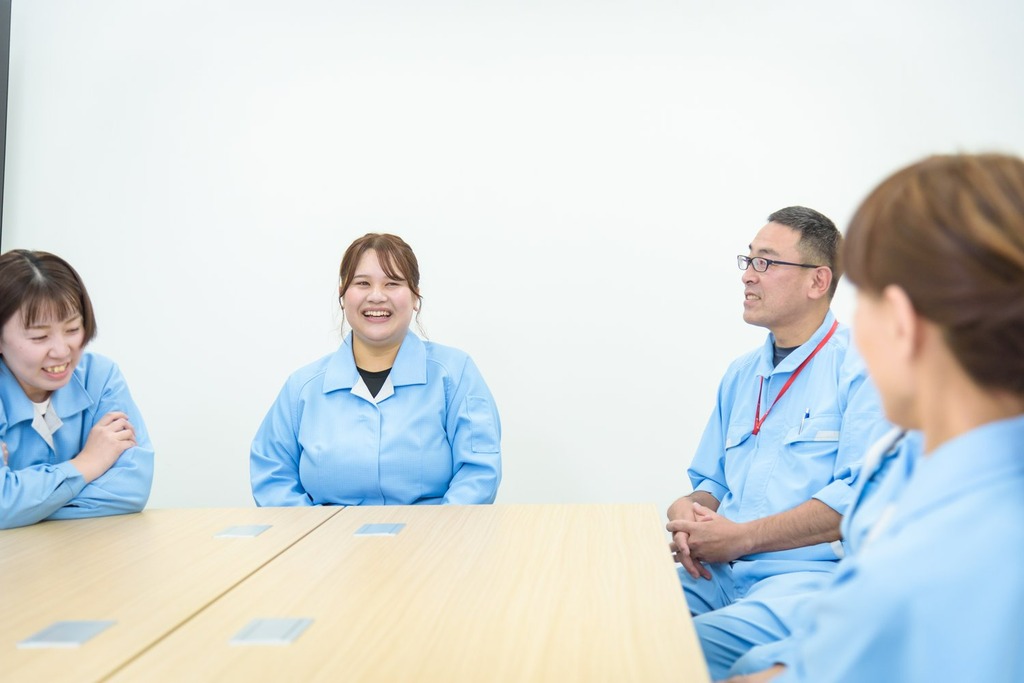
—— Inspired by your senior colleagues, you went from temporary agency worker to contract employee to permanent employee in a little over two years. Looking back, what made the difference?
I think it was wanting to know more. I’ve always been the type to ask why, and whenever I didn’t understand something, I asked right away. What kind of work do the permanent employees do? What do jobs like document control, which temporary agency workers can’t take part in, actually involve? How did they ever acquire this enormous number of skills? The more I asked, the more I wanted to become a permanent employee myself, and about six months after I started, I was telling the people around me, “I want to become a permanent employee.” The stability of a permanent position was a reason that came later. For me, cool mattered more than stability.
Then the senior colleagues who had heard me say that got behind me: “All right, let’s give it a try.” You need a track record to become a permanent employee, so I first became a contract employee and built up my record, with people helping me with tasks and documents that are normally entrusted only to permanent employees. The exam was the same hiring exam that outside applicants take, with both an interview and a written test. Through all of that, not one person said a mean word. Everyone was so nice, and I learned the job with their help.
I don’t think I did anything special, but I do think I had more drive than anyone. Because I kept saying it out loud, I feel my managers and senior colleagues took me seriously.
—— Is there anything you especially value in your day-to-day work?
The packaging process includes not only automated lines but also manual steps, where we put products into small pouches and seal them by hand. The manual work is extremely detailed and takes a knack, so I nearly gave up while I was learning it. I think I kept going because I so badly wanted to become like the senior colleagues I admired, as soon as I could.
The other thing is knowing the meaning behind each procedure. Once you understand the background—“Why this procedure?” “Why can’t we do it that way?”—the work becomes much easier to learn. In fact, there isn’t a single procedure without a reason. For example, when we switch from one product to another, we change the equipment dimensions to match the product size, and even being off by a tiny amount can scratch the product or keep the flap (the fold-over lid at the opening of an individual carton) from tucking in properly. So if we hear even a slightly unusual sound during production, we stop right away and check the dimensions again. We go over those fine details together as a team.
One procedure with a clear reason behind it is changing clothes. At a pharmaceutical plant, workers change into designated cleanroom garments, and even change their socks, before entering the production area. It is a basic rule to keep dust and microorganisms from being brought in from outside.
The Kanegasaki Plant goes a step further: workers always change when they leave the plant as well, even for a short time. This is to keep antibacterials being manufactured from clinging to clothing and being carried unintentionally into the outside environment. Antibacterials released into the environment are thought to be one factor behind the rise of drug-resistant bacteria, against which medicines are less effective, a problem known as antimicrobial resistance (AMR). Internationally, plants that handle antibacterials are expected to have controls in place to prevent releases from manufacturing processes into the environment.
The entire Kanegasaki Plant is committed to these controls. In 2025, it obtained the international certification “BSI Kitemark™ for Minimized Risk of AMR” for both the active pharmaceutical ingredient (API) and formulation manufacturing processes of the antibacterial cefiderocol. It was the first certification in Japan for an antibacterial manufacturing facility. Changing clothes every day is part of the same idea: keeping antibacterials from getting out.
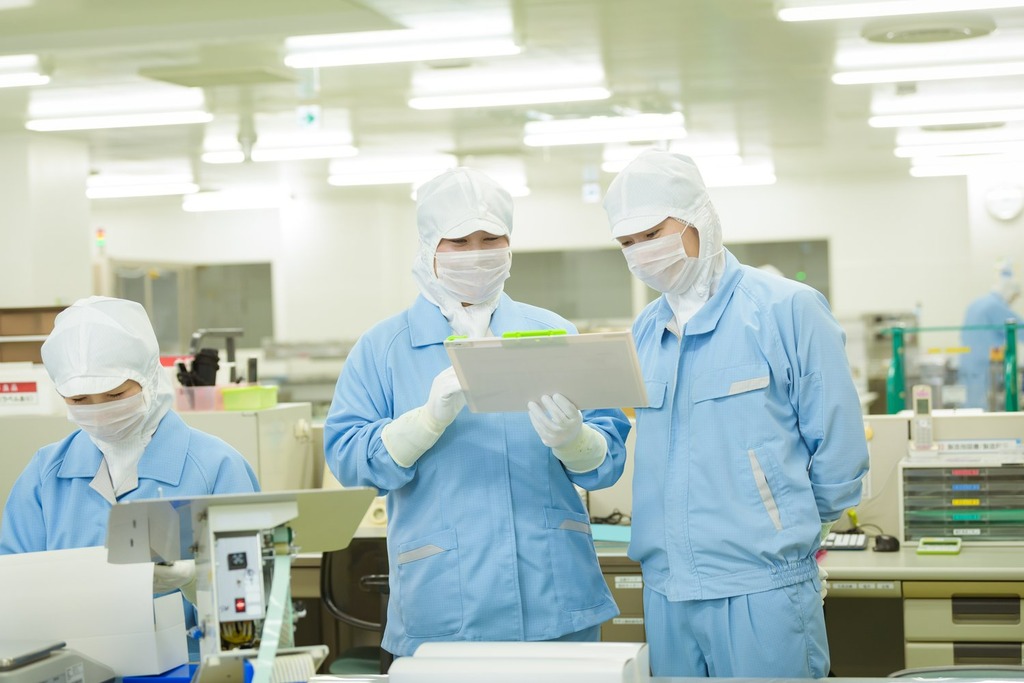
—— You’re now involved in on-the-job training as well. As you’ve moved from being taught to teaching, what do you keep in mind?
I try never to forget that everyone is anxious at first. It was my first time working in a plant, and I was confused by everything, so I make a point of telling people, “It’s totally normal not to get it at first.”
My department has everyone from people fresh out of high school to people around my mother’s age. So I’m especially careful about how I choose my words. I recently read in a book that “words can nourish,” and it really clicked with me. When you speak to people with nourishing words, the atmosphere brightens and trust deepens. I think getting angry at someone and correcting them are two different things. Instead of “Don’t do that,” I say, “So that’s how you’ve been doing it. But doing it that way leads to this, so let’s do it this way instead.” It may sound long-winded, but that’s how I try to say it.
I think the most important thing in plant work, where everyone cooperates, is being someone people feel they can easily come to for advice. When I teach, too, I try not to give the answer first. I ask what the person thinks, and then we check together.
—— I hear you’re also involved in a project to automate staff assignments.
Yes. Until now, the person in charge has put together the work assignments for about 40 people by hand, alone, every month. Who has which skills? Who should go into which training? Our department has so many kinds of skills that it’s a very complex and time-consuming task. A project was launched to automate this with AI, and my role is to share, from the plant floor’s point of view, what we struggle with and what looks like it could be automated.
I’m hoping it will reduce human error and make it easier to create the assignments. That said, I don’t want to leave everything to the system. As I do my daily checks, I remind myself that we can’t stop thinking for ourselves.
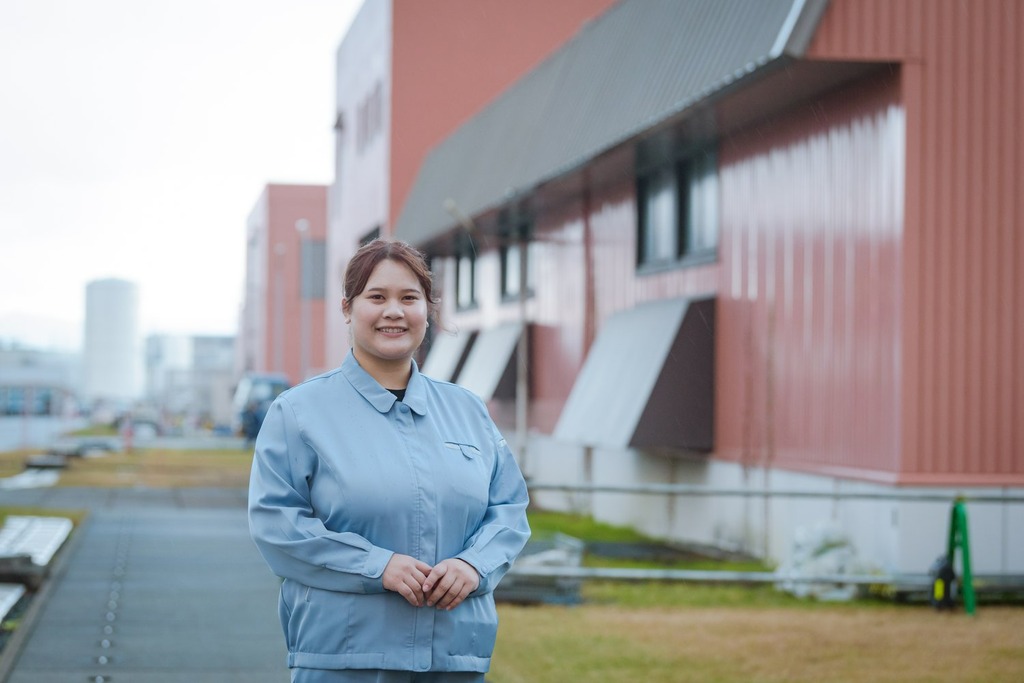
—— It’s clear how much you enjoy your work. Is there anything you find hard?
Winter. When the snow piles up, my commute more than doubles, and some days I have to clear the snow off my car after overtime before I can go home. Last year, my car got stuck on a hill along my commute. Then a truck driver who had been waiting behind me walked up the hill and told me, “Just let the tires bite into the snow as you go.” I did as I was told and got moving again. I was so grateful that I wished I had at least asked the driver’s name.
There are times when production gets very busy, but the busier it gets, the more I enjoy it. The members of our group get along well, so the time I spend working with everyone is the most fun, and when the satisfaction of the work itself comes on top of that, the two just feed off each other. Maybe it’s a bit like a school club.
Also, for a while I kept seeing news on TV about medicine shortages, and it really hurt. Our job is to make the set number of lots by the deadline. It sounds obvious, but I realized that to do the obvious, every one of us has to be fully committed. I now feel that even the small tasks I do are connected to big problems like that.
—— And when do you find the work most rewarding?
When I see the medicines we’ve put so much time into being loaded onto a truck and shipped out. Packaging is the last step before shipment, so maybe I feel it all the more. I think, “These are about to reach the people who need them,” and I get a lump in my throat. In my heart I tell them, “Off you go,” as if I were sending my own child out into the world.
Also, when I see a doctor myself, I’m sometimes prescribed a medicine we manufactured. I think, “This is how we’re supporting someone’s everyday life,” and I feel very proud to work at Shionogi Pharma.
—— What are your goals for the future?
I want to deepen my knowledge of the equipment and get better at handling problems, and eventually become a “process leader,” the person responsible for a production line. Only someone who can truly be called a pro on that line can take on the role, and everyone doing it now has more than 10 years of experience. Honestly, it’s still a long way off (laughs). But I’ve always been the type who served as class president or club captain, and I think I just like seeing the whole picture and bringing people together.
Lately, people around me have been coming to me more often when they don’t understand something. Counting my earlier jobs, I was the junior one for a long time, so I can feel that I’ve changed: now I’m the one being asked. The packaging group has many veterans, so I want to take the lead among the younger staff and help pass the veterans’ skills on to them. Some of them tell me, “Maybe I’ll aim to become a permanent employee, too,” so I think climbing together with them has become part of my role as well.
—— Finally, do you have a message for people who have no experience but would like to take on the challenge?
I started with absolutely no experience in plant work myself, but with the people around me teaching me, I’ve made it this far. This is work that usually stays out of sight, and that’s exactly why I want people to know how cool it is. Behind the medicines we pick up without a second thought are the hands, and the sense of responsibility, of a great many people. To anyone who’s even a little interested in being part of that, I want to say, “You’ll be absolutely fine.” Just come and see for yourself. I look forward to the day we can work together.
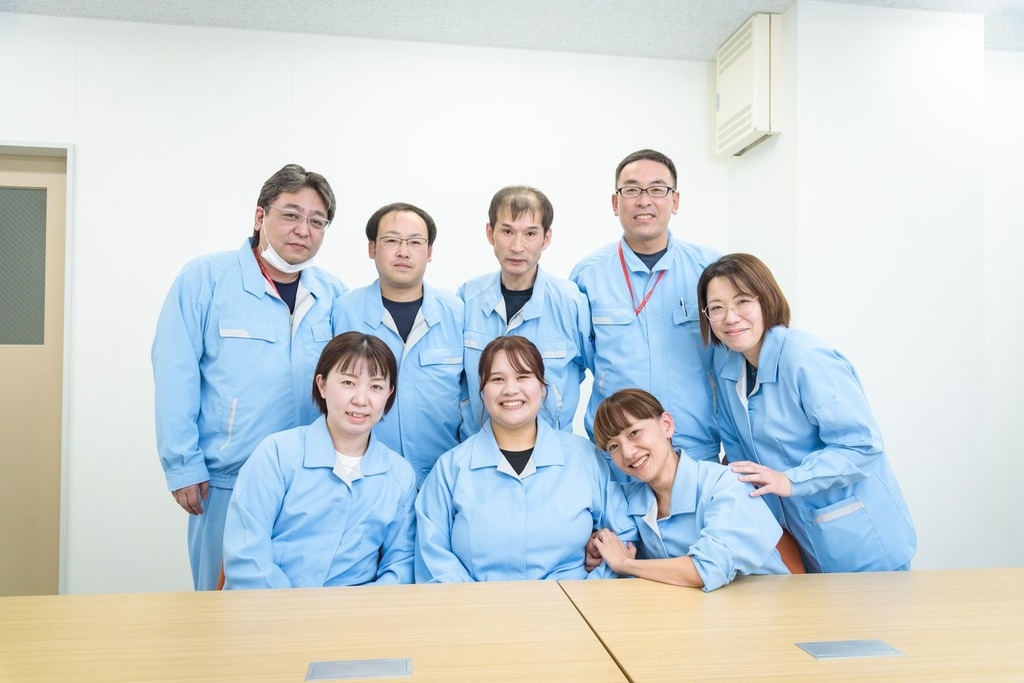
Her Biggest Source of Energy: Cheering On Her Favorite Idol Group!
At the end of the interview, looking a little more relaxed, Suzuki told us how she enjoys her days off. Her favorite is the idol group FRUITS ZIPPER. She says watching them on Instagram and TikTok soothes her, and traveling to their concerts is another thing she looks forward to. She also recharges with saunas and good food. Even so, after several days off in a row, she admits with a laugh, she finds herself thinking, “I’d like to get back to work soon.”