Release
2026/10/07

OSAKA, Japan, month day, 2024 - Shionogi & Co., Ltd. (Head Office: Osaka, Japan; Chief Executive Officer: Isao Teshirogi, Ph.D.; hereafter “Shionogi”) announced that it has completed activities in the Republic of Kenya and the Republic of Ghana under the third phase of the “Mother to Mother SHIONOGI Project”¹ (hereafter “the Project”), an initiative supporting mothers and children in Africa. The activities were conducted in partnership with World Vision Japan (hereafter “WVJ”), an international NGO, in Kenya and with the Japanese Organization for International Cooperation in Family Planning (hereafter “JOICFP”), a Japan-based NGO, in Ghana. Various indicators related to maternal and child health and access to healthcare improved through these activities.
The Project is a maternal and child health initiative launched by Shionogi in the Republic of Kenya in 2015. Through the first and second phases, Shionogi worked to improve access to maternal and child health services and strengthen local health systems by developing healthcare facilities and building the capacity of health workers. The operation of the health facilities established in each project area was transferred to the respective local governments, with the first phase completed in July 2021 and the second phase in December 2023.
Building on the learnings and networks gained through the first and second phases, Shionogi launched the third phase in June 2023.²
Key Activities in the Republic of Kenya
In Gilgil Sub-County, Nakuru County, the target area for the third phase in the Republic of Kenya, healthcare users were concentrated at a single health center, making it difficult for them to receive the healthcare services they needed. The area also faced challenges including stunting and underweight among children, inadequate household sanitation facilities such as toilets, and diarrhea among children.
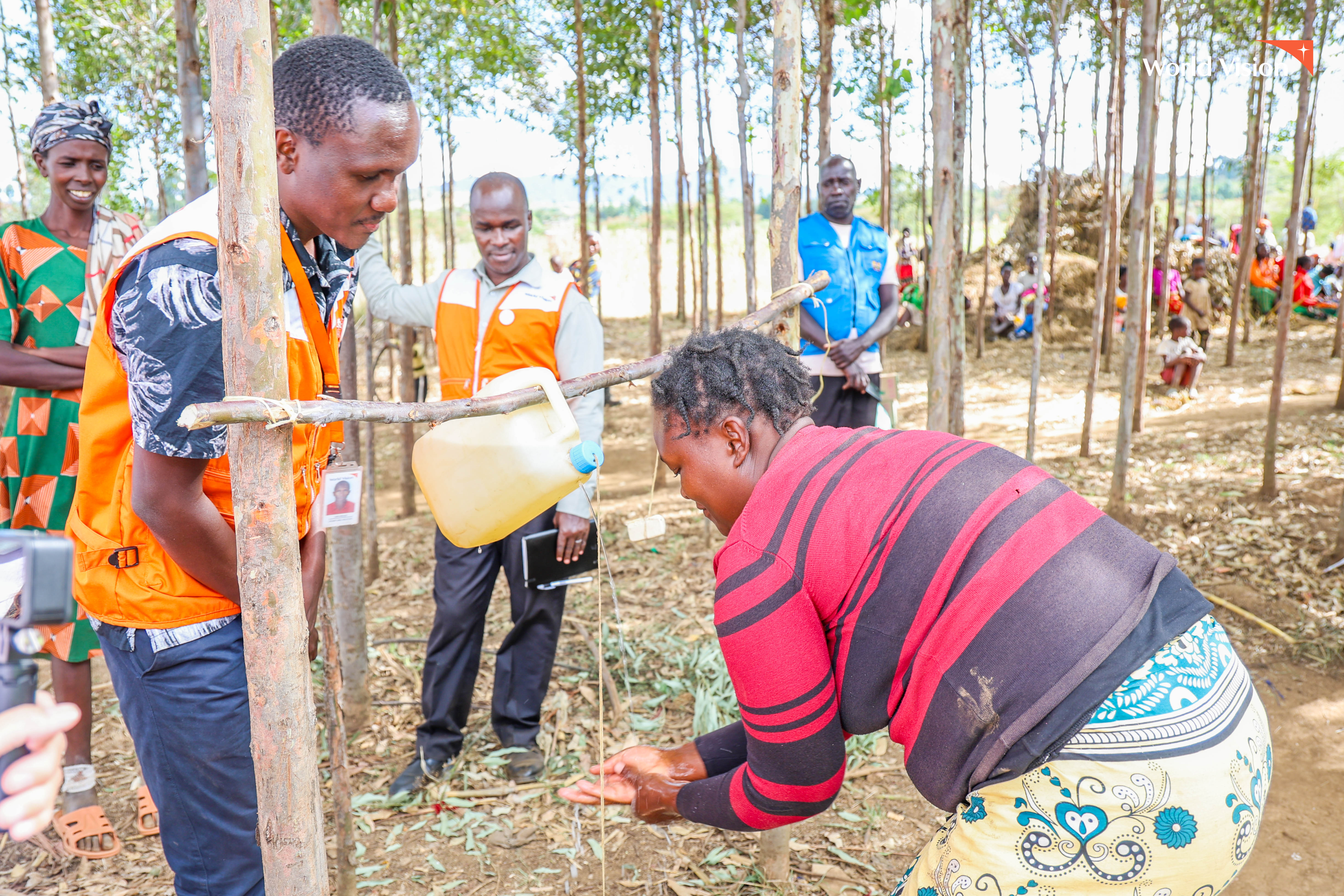
Together with WVJ, the Project implemented an integrated set of initiatives comprising improvements to health facilities, skills development for healthcare workers, community awareness activities through peer groups of mothers, and water, sanitation and hygiene (WASH) activities.
Results in Kenya
Improvements to health facilities and enhanced skills among healthcare workers increased the service capacity of each health facility, making it easier for pregnant and postpartum women and children to access healthcare services close to home. This improved access to maternal and child health services, including greater use of antenatal and post-natal care. Continued WASH education in schools and communities also improved hygiene practices among residents and contributed to fewer cases of diarrhea and underweight among children. Together, these initiatives supported better maternal and child health in Gilgil Sub-County and contributed with reductions in the maternal mortality rate and the under-five mortality rate.
Key Indicators in the Republic of Kenya
Indicator |
Baseline (2021) |
Endline (2026) |
Antenatal care coverage (at least four visits) |
52% |
79% |
Full vaccination coverage among children |
85% |
90% |
Households practicing drinking water treatment |
70.1%* |
91.0% |
Handwashing with soap practice rate |
88%* |
92.6% |
Rate of delivery-related complications |
2% |
1% |
Number of underweight children under five |
329 |
127 (61% reduction) |
Number of diarrhea case among children under five |
773 |
613 (21% reduction) |
Key Activities in the Republic of Ghana
In Upper Manya Krobo District in the Eastern Region of the Republic of Ghana, physical access to health facilities capable of supporting childbirth and inadequate sanitation were challenges. Diarrheal disease was also a major issue and one of the causes of death among children under five.
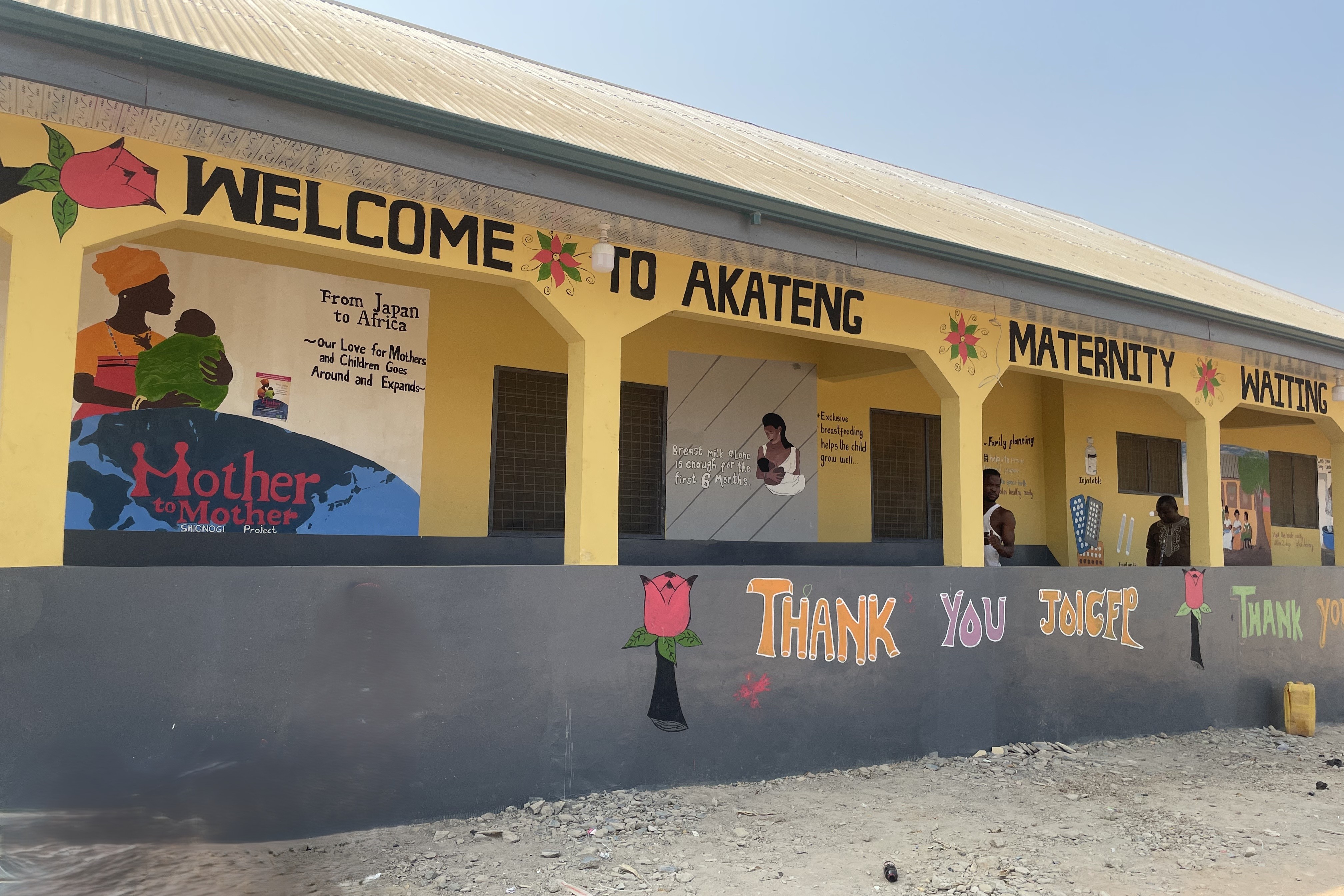
Together with JOICFP, the Project developed healthcare infrastructure for safe facility-based deliveries through the construction of a maternity ward, a maternity waiting house, a clinic, and accommodation for health workers. It also strengthened the skills of health workers and provided health and WASH education to community residents.
Results in Ghana
Improved healthcare infrastructure and stronger skills among health workers enhanced access to safe childbirth and healthcare services. Maternal and child health indicators improved, including the rate of births attended by skilled health personnel and the use of family planning services,* enabling more pregnant and postpartum women to receive appropriate services.
Health and WASH education for community residents also increased knowledge of maternal and child health and childhood diarrhea, as well as the handwashing practice rate. Appropriate care-seeking behavior and home care practices were promoted, and all identified cases of diarrhea received appropriate treatment.
The maternity waiting house established at the Akateng Health Centre, the first such initiative in Ghana, has been highly evaluated by the Regional Health Directorate and government authorities, and expansion to other areas is anticipated.
* The proportion of couples or individuals using contraception or other family planning services to plan the number, timing, and spacing of children they wish to have
Key Indicators in the Republic of Ghana
Indicator |
Baseline (2022) |
Endline (2025) |
Births attended by skilled health personnel |
45% |
88% |
Antenatal care coverage (at least four visits) |
80% |
84% |
Family planning service utilization rate* |
57% |
80% |
Number of maternity waiting house users |
New facility |
276*** |
Number of referrals to health facilities |
2,754 |
9,886 |
Knowledge of maternal and child health and childhood diarrhea (%) |
44%** |
67%*** |
Handwashing practice rate |
34%** |
83%*** |
** Results of a survey conducted in 2023
*** Results of a survey conducted in 2026
The Project³ is also developing an application in the United Republic of Tanzania aimed at preventing diarrhea, and its effectiveness is currently being evaluated.
Shionogi has identified “Improve access to healthcare” as one of the material issues it should address. Shionogi will apply the outcomes and learnings gained through the Project to future activities. Through collaboration with a wide range of partners, Shionogi will continue working to strengthen health systems and improve access to healthcare, thereby contributing to a society in which everyone can receive the healthcare services they need.
References:
1. Mother to Mother SHIONOGI Project
2. June 1, 2023 press release:
Launch of the Third Phase for the Mother to Mother SHIONOGI Project — New Activities to Support Maternal and Child Health in Kenya and Ghana
3. December 22, 2023 press release:
App Development for Diarrhea Prevention in Tanzania under the Third Phase of the Mother to Mother SHIONOGI Project
Forward-Looking Statements
This announcement contains forward-looking statements. These statements are based on expectations in light of the information currently available, assumptions that are subject to risks and uncertainties which could cause actual results to differ materially from these statements. Risks and uncertainties include general domestic and international economic conditions such as general industry and market conditions, and changes of interest rate and currency exchange rate. These risks and uncertainties particularly apply with respect to product-related forward-looking statements. Product risks and uncertainties include, but are not limited to, completion and discontinuation of clinical trials; obtaining regulatory approvals; claims and concerns about product safety and efficacy; technological advances; adverse outcome of important litigation; domestic and foreign healthcare reforms and changes of laws and regulations. Also for existing products, there are manufacturing and marketing risks, which include, but are not limited to, inability to build production capacity to meet demand, lack of availability of raw materials and entry of competitive products. The company disclaims any intention or obligation to update or revise any forward-looking statements whether as a result of new information, future events or otherwise.
For Further Information, Contact:
SHIONOGI Website Inquiry Form : https://www.shionogi.com/global/en/contact.html